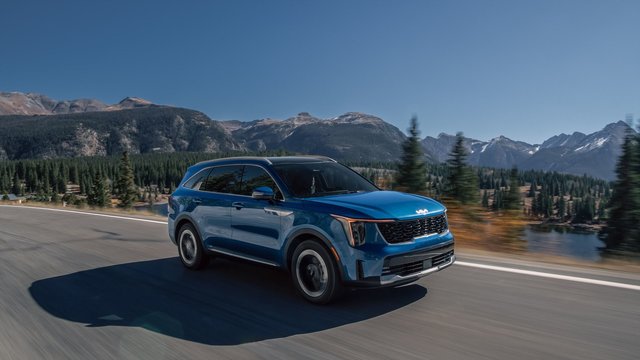
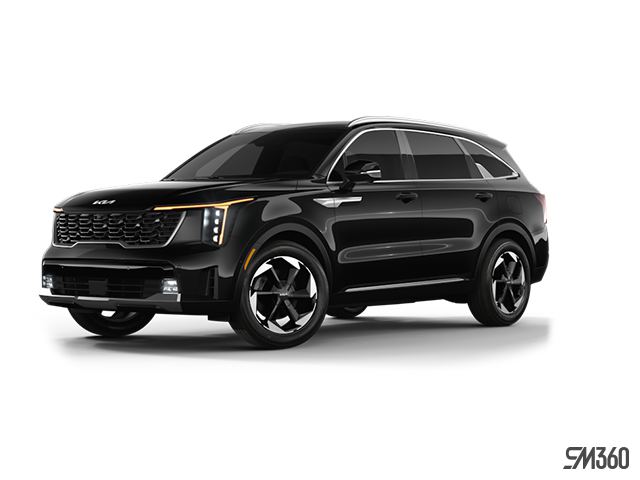
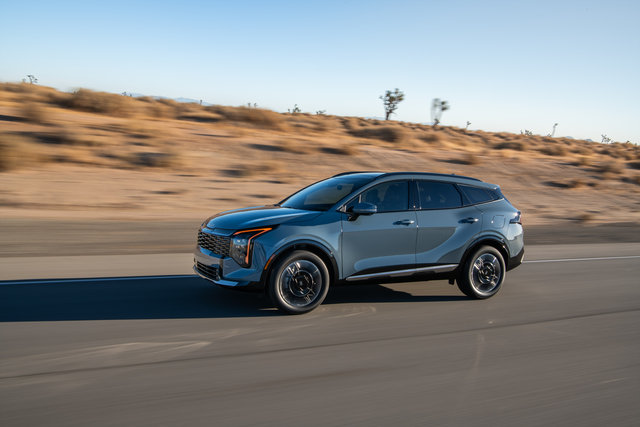
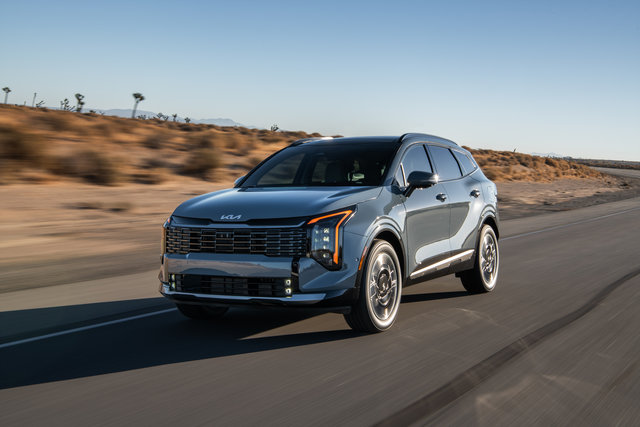
Choosing the right vehicle for your daily commute means matching your driving habits, route conditions, and lifestyle needs to a vehicle's capabilities. The 2026 Kia Sorento offers three distinct powertrains—gasoline, hybrid, and plug-in hybrid—each designed for different commuting scenarios. Before you decide, ask yourself these key questions to determine which Sorento configuration fits your Quebec driving routine.
From long highway stretches between Laval and Montreal to stop-and-go traffic on Autoroute 15, or cargo space for carpools and weekend gear, the Sorento's three-row layout addresses varied commuting realities. Here's how to assess if this SUV matches your needs.
Do You Have Access to Charging Infrastructure?
Your ability to charge at home or work directly impacts which Sorento powertrain makes sense for your commute.
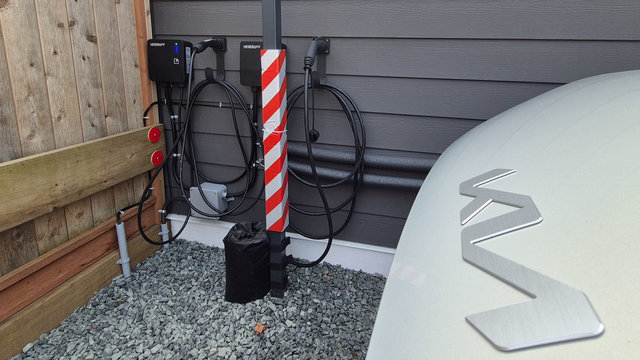
The Sorento Plug-in Hybrid (PHEV) delivers 55 km of all-electric range on a full charge, covering many Laval-area commutes entirely on electricity. If you can plug in overnight using a 240-volt Level 2 charger (full charge in 3.8 hours), you'll drive most days without burning gasoline. This works well for drivers with garage access or workplace charging stations.
Without regular charging access, the Sorento Hybrid (HEV) offers a better fit. Its self-charging system captures energy during braking and coasting, delivering 227 hp combined output without requiring external electricity. You'll achieve 7.0 L/100 km combined fuel economy while the hybrid system automatically optimizes efficiency in city traffic.
The standard gasoline Sorento remains an option if charging infrastructure isn't available and you prefer conventional fuelling, though Kia Canada's documentation focuses primarily on the electrified variants for 2026.
What Does Your Daily Commute Look Like?
Your route type determines which powertrain delivers the most value.
For short urban commutes (under 50 km round-trip): The Sorento PHEV's 55 km electric range handles your entire drive on battery power alone. You'll consume 2.8 Le/100 km when operating in combined gasoline-electric mode, significantly reducing fuel costs compared to conventional SUVs. The instant torque from the electric motor provides smooth acceleration from stoplights along Boulevard des Laurentides or Autoroute 440.
For mixed city-highway commutes (50–100 km daily): The Sorento Hybrid excels here, combining 227 hp with 7.0 L/100 km efficiency. The 6-speed automatic transmission and all-wheel drive system handle variable Quebec road conditions while the 67 L fuel tank provides extended range between fill-ups.
For long-distance highway commutes (100+ km daily): Both hybrid variants offer all-wheel drive and sufficient power for highway merging and passing. The PHEV's 268 hp provides stronger acceleration when needed, while the HEV's larger fuel tank (67 L vs. 47 L) means fewer stops during extended drives.
How Important Is All-Wheel Drive for Your Route?
Quebec's four-season climate makes all-wheel drive a practical consideration rather than a luxury feature.
Both the Sorento Hybrid and PHEV come standard with all-wheel drive, distributing power between front and rear wheels as traction conditions change. This system helps during:
- Winter commutes through snow-covered streets in Laval or icy patches on Autoroute 13
- Spring thaw when roads alternate between wet pavement and slush
- Sudden weather changes that create unpredictable surface conditions
The AWD system works with electronic stability control and traction control to maintain grip during acceleration and cornering. If your commute includes unpaved roads, steep driveways, or frequent winter driving, the standard AWD configuration adds confidence without requiring driver intervention.
Do You Need Cargo Space Beyond Passenger Seating?
The Sorento's three-row configuration offers flexibility for commuters who also serve as family transportation coordinators.
Cargo capacity varies by seating configuration:
- Behind third row: 357 L for daily essentials (backpacks, groceries, gym bags)
- Behind second row: 1,090–1,274 L with third row folded (weekly shopping, sports equipment)
- Behind first row: 2,139 L with both rows folded (furniture, large purchases)
If your commute includes school drop-offs, carpooling with colleagues, or transporting equipment, the 6-passenger seating (with second-row captain's chairs in PHEV) or available 7-passenger configuration provides practical flexibility. The 50:50 split-folding second and third rows let you adjust space as daily needs change.
The smart power liftgate (available on EX and SX trims) opens automatically when you approach with the key fob, useful when your hands are full after grocery shopping or picking up supplies.
What Technology Features Matter for Your Daily Drive?
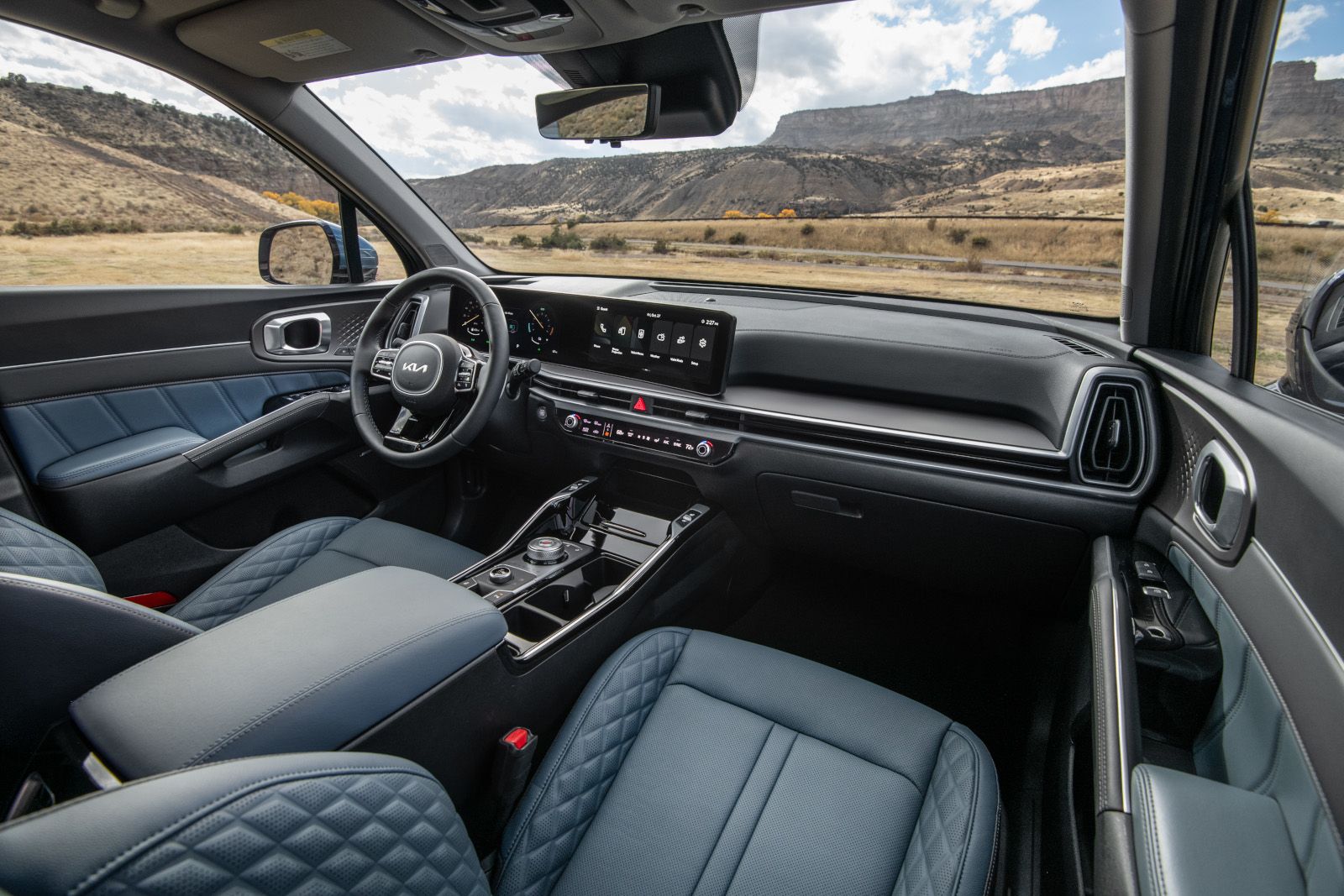
Modern commuting involves more than just driving—connectivity, safety systems, and comfort features reduce stress during repetitive routes.
Standard technology across Sorento trims includes:
- 12.3-inch multimedia interface with Apple CarPlay and Android Auto integration
- Bluetooth hands-free connectivity for calls and audio streaming
- Smart cruise control with stop-and-go functionality for traffic jams
- Forward collision-avoidance assist and lane-keeping assist
Higher trims (EX and SX) add:
- Navigation system for route planning around traffic delays
- Highway Drive Assist 2 for semi-autonomous highway driving
- Surround view monitor for tight parking situations
- Bose premium audio system (9 or 10 speakers depending on trim)
- Wireless phone charging
If your commute involves frequent highway driving on Autoroute 15 or 440, Highway Drive Assist 2 maintains lane position and following distance, reducing fatigue during longer drives. The heated steering wheel and heated front seats (standard on all trims) make cold morning starts more comfortable during Quebec winters.
How Does Your Fuel Budget Align with Powertrain Costs?
Fuel efficiency directly impacts your monthly commuting expenses, making powertrain choice a financial consideration.
The Sorento PHEV offers the lowest per-kilometre cost if you charge regularly and drive within electric range daily. At 2.8 Le/100 km in combined mode, you'll spend significantly less than conventional SUVs—especially if your electricity rates are lower than gasoline prices. When operating on gasoline only (after battery depletion), efficiency drops to 6.9 L/100 km.
The Sorento Hybrid delivers consistent 7.0 L/100 km efficiency regardless of charging access, making fuel costs predictable. The larger 67 L fuel tank means fewer stops, while the self-charging system requires no behaviour changes from conventional driving.
Calculate your potential savings by estimating:
- Daily commute distance
- Current fuel consumption in your existing vehicle
- Local electricity rates vs. gasoline prices
- Available charging opportunities
What Warranty Coverage Supports Your Long-Term Commuting Needs?
Reliability matters when a vehicle serves as your daily transportation link to work.
The 2026 Sorento includes:
- 5-year/100,000 km limited powertrain warranty
- 8-year/150,000 km limited EV components warranty (for hybrid and PHEV battery systems)
- 5-year unlimited kilometre roadside assistance
The extended EV components warranty specifically covers the hybrid and plug-in hybrid battery packs, electric motors, and related systems—addressing long-term durability concerns for electrified powertrains. This coverage extends beyond typical commuting mileage for most drivers, providing confidence in the technology's longevity.
Key Considerations at a Glance
|
Question
|
Sorento PHEV
|
Sorento HEV
|
|
Best for commute distance
|
Under 55 km (all-electric capable)
|
50–100+ km (no charging needed)
|
|
Fuel efficiency
|
2.8 Le/100 km combined; 6.9 L/100 km gas-only
|
7.0 L/100 km combined
|
|
Charging requirement
|
3.8 hours (240V) for full charge
|
Self-charging (no plug required)
|
|
Power output
|
268 hp combined
|
227 hp combined
|
|
Fuel tank capacity
|
47 L
|
67 L
|
|
Cargo (3rd row up)
|
357 L
|
357 L
|
|
All-wheel drive
|
Standard
|
Standard
|
Find Your Ideal Sorento Configuration at Lallier Kia de Laval
The 2026 Kia Sorento's three powertrain options mean you can match your commuting patterns to the right efficiency and capability balance. From electric driving for short trips to hybrid efficiency for mixed routes or maximum range between fuel stops, the Sorento lineup offers a configuration designed for Quebec's driving conditions.
Visit Lallier Kia de Laval to explore the Sorento Hybrid and Plug-in Hybrid models in person. Our team can help you assess which powertrain fits your daily commute, charging access, and long-term transportation needs throughout Laval and the greater Montreal region.